
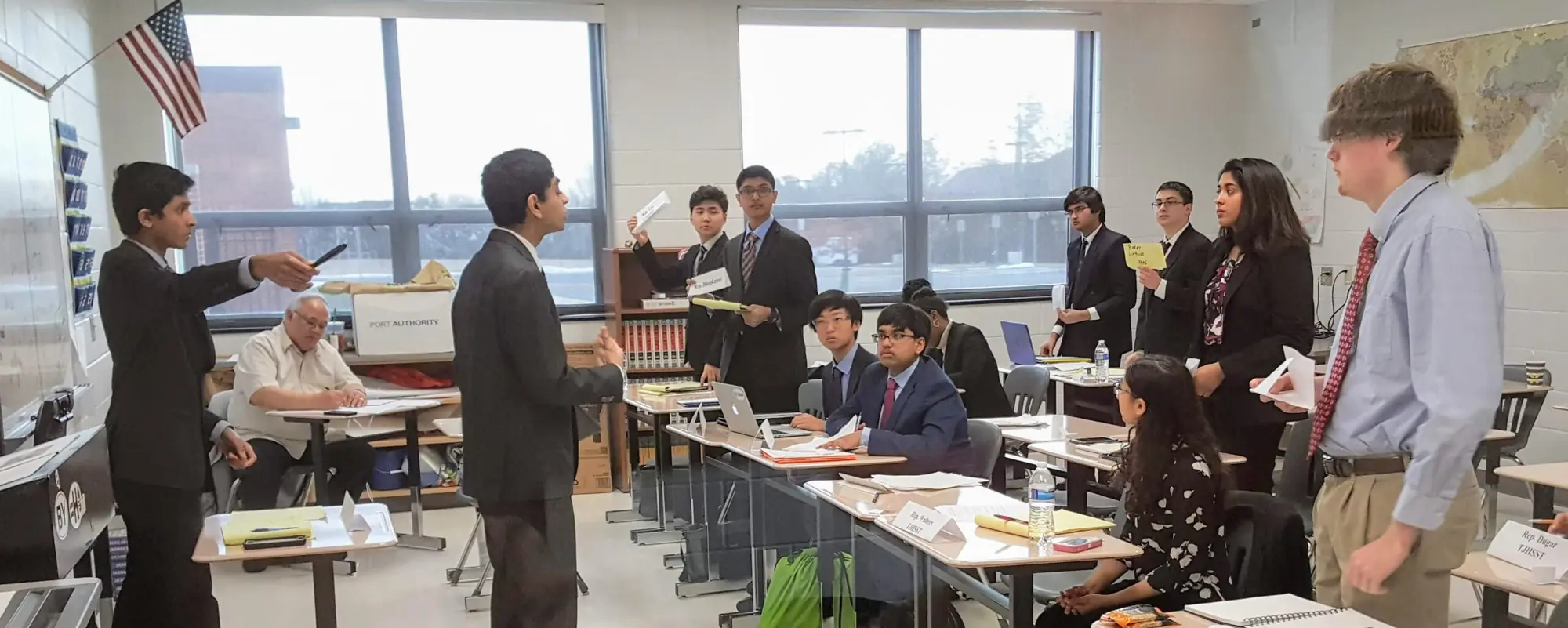
Event overview
Student Congress simulates a legislative session where 12–25 students debate bills and resolutions. Students give speeches, ask questions, and vote on legislation. Students conduct business following Robert’s Rules of Order.
What you need
- A free Tabroom account (your coach can help).
- A Wi-Fi enabled device (laptop/tablet for comments).
- Be prepared to stay the entire day, but you won’t judge all sessions.
Assignments
- Check Tabroom before each session for your assignment.
- Please stay in the judges lounge in the event the tournament director needs to make a substitution.
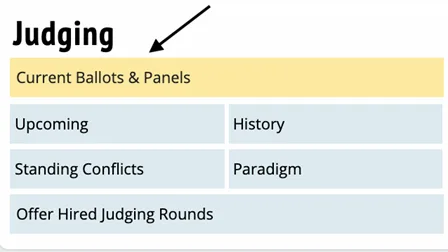
Judging
- Go to the room assigned in Tabroom.
- Log in to Tabroom and click “START” on your assignment.
- Silence your phone.
- You will be judging each student’s speech only. The parliamentarian will judge questions, handling of questions, chamber business, and participation. You are only judging the speech itself.
Ballots
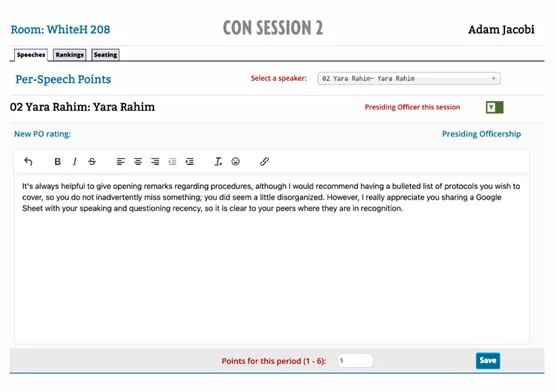
- Each speaker gets a separate window for each speech given with space for:
- Legislation name (abbreviate if needed).
- Speaker’s position (AFF/NEG).
- Some students might not make a speech; they will not have a speech score.
- Unsure if the presiding officer is doing a great job? If the Parliamentarian (adult at the front) is not having to interfere to help them conduct the session, they are likely going to be in your top ranking and earning a score of 6.
- Write comments throughout the speech (see the scoring guide below).
- Set aside your personal bias (beliefs and opinions) and focus on judging criteria.
- Be kind in your comments. Do not comment on appearance or unrelated aspects.
- Score speeches 4–6 (4 = lowest, 6 = highest) based on the criteria below.
- 2–3 reserved for wrong bill/side, very short, or offensive speeches.
- These scores are for NSDA points and feedback, not to determine the winner.
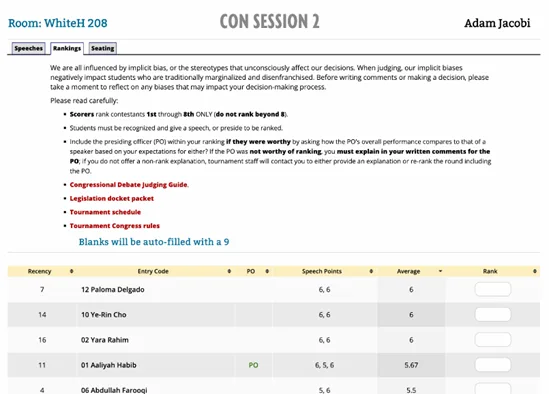
Ranking
- At the session’s end, rank the top 8 speakers (1 = best, 8 = lowest).
- The Presiding Officer’s performance (fairness, maintaining order) should be considered in ranking.
- Do not discuss scores or ranks with the other judge.
- Submit your ranks/scores. Once submitted, they are final. Please complete this as soon as possible.
- You will need to confirm scores twice in Tabroom.
After the session
- You can continue writing comments on ballots until the awards ceremony.
- Do not give students verbal feedback. They will receive ballots with your comments later.
Need help?
- The parliamentarian can assist with technical issues and stop the session for breaks.
Scoring and feedback guide
Use the following chart to consider scores for speeches and how to write feedback.
| Speaker ballot | Suggested language |
|---|---|
| Overall consideration Scorers will rank the top 8 students participating in the Chamber, which includes the Presiding Officer. Scorers will score each speech with a rating of 1 to 6. |
|
| Delivery Does the speaker manifest poise, style, coherency, and a seriousness of purpose in presenting the speech? |
|
| Originality of thought Does the speech advance debate or merely rehash old points? Is there a new twist or angle to the argument? Does the speaker take into account arguments made by previous speakers? |
|
| Organization and unity of speech Does the speech ramble or does it develop? Does the speech move from point to point in an orderly way? |
|
| Evidence and logical basis for statements Does the speaker state references to books, magazines, newspapers, or credible web sites? Number of citations of sources. |
|
| Overall impact and impression |
|